
Friday, November 14, 2014


Wednesday, November 12, 2014
By Friar Casey - Cardinal Differences
New post on Breaking In The Habit |  |
|


Tuesday, November 11, 2014

Let us pray for all our Veterans, living and deceased. Thank you for your service to us and for us.
Veterans’ service honored with parades, concerts — and prayerby Julie Asher |

(CNS photo/Gregory L. Tracy, The Pilot)
Today, on Veterans’ Day, our nation's 19.6 million veterans will be honored with numerous concerts, including one in Washington this evening, as well as many parades and picnics. Archbishop Timothy P. Broglio of the U.S. Archdiocese for the Military Services suggests one more way to honor these men and women for their service: With prayer.
"Veterans Day invites us to pause for a moment and reflect on the lives of men and women who respond and responded to the needs of our nation," he said in a statement. "As it is November, a month dedicated to prayers for the dead, we remember many members of the Armed Forces who made the ultimate sacrifice or who died of natural causes later in life.
“However, we cannot forget those who continue to suffer the effects of their wounds either in mind or in body. They carry the reminders of their commitment and their past with them always. We pray for them, too, and we ask the Lord to give them consolation and healing," he said.
“The occasion is also propitious to remember the families who mourn the loss of a loved one or who support a disabled Veteran. We pray and offer them our support.”
Last Wednesday, the headquarters of the U.S. military archdiocese in Washington was officially named the "Edwin Cardinal O'Brien Pastoral Center."
Cardinal Edwin F. O’Brien, a former archbishop of Baltimore who is grand master of the Equestrian Order of the Holy Sepulchre of Jerusalem, was the U.S. military archbishop from 1997 to 2007. Archbishop Broglio, his successor, and the cardinal led a brief service and the unveiling of a sign bearing his name over the front door of the pastoral center. The brief service was attended by dozens of archdiocesan clergy, staff and supporters.
Then-Archbishop O’Brien headed the military archdiocese in 2005 when it acquired what was a seminary owned and operated by the Society of the Divine Word. He oversaw a major, two-year renovation of the five-story building -- with a loan from the Knights of Columbus. In 2007, with completely refurbished office space, the archdiocese moved in and for the first time could consolidate all of its operations in one location. The chapel has been outfitted with pews, an altar, tabernacle and other elements re-purposed from closed churches in Cleveland. A special room has been set aside to honor Father Vincent Capodanno, known as the "Grunt Padre." He died in Vietnam Sept. 4, 1967.
Father Capodanno, a Maryknoll priest and Navy chaplain, died in Operation Swift in the Thang Binh district of the Que Son Valley. He went among the wounded and dying, giving last rites. Wounded in the face and hand, he went to help a wounded corpsman only yards from an enemy machine gun and was killed. He is considered "one of the great military chaplains.
His canonization cause was officially opened in 2002. In 2004, the initial documentation for the cause was submitted to the Vatican's Congregation for Saints' Causes. In 2006, Father Capodanno, a native of Staten Island, N.Y., was declared a "servant of God."

Cardinal Edwin F. O'Brien blesses headquarters of U.S. military archdiocese in Washington. (CNS photo/Julie Asher)
Cardinal O'Brien, in remarks Nov. 5, said the headquarters of the military archdiocese "gives us a solid and permanent identity as a church of Christ in the Catholic tradition. It’s an announcement to all who would pass by -- the message that I always tried, and I think all our chaplains do -- is to convey, especially to our young people: there’s no contrast between a person of faith and a member of the military. There's no opposition.
"I always use the brief story of the good Samaritan going down the road and came upon a man who was half-dead, and he took care of him, put him on his donkey, brought him to a hotel, and so forth," the cardinal continued. "But two others had passed by before that. And they did nothing. My thought was ‘what if this good Samaritan was coming by and the man was being pelted half to death?’ Did he have a right to step back and say, ‘I’ll become a good Samaritan in about 10 minutes when the fight is over?’ Or did he have a right and an obligation to step in and do what had to be done, and only what had to be done, to put an end to that aggression? "
He concluded: "To be a member of the military is to have the potential of a wonderful vocation. One enters a service. Christ defined himself as one who came to serve, and not to be served.”
Monday, November 10, 2014

Saturday, November 8, 2014
Sister Claire Andre's Funeral Mass, November 7, 2014

Sister Claire Andre's Funeral Mass was November 7th, 2014.
Sister Claire died November 4th.
Claire did all her programs for her Wake Service
And Eucharistic Mass back in April, 2014.
At the Wake service Claire had asked Friar Jim Moore OFM Conventual to share his memories of her and then she asked him to open it up to the people attending and several did share their memories of her.
Sister Claire had asked Friar Justin Biase OFM Conventual
to be main celebrant,
Friar Andre Cirino OFM, homilist,
Friar Andre Cirino OFM, homilist,
1st Reading , Friar David Moczulski OFM,
2nd Reading Claire's niece, Loren Rossi,
Gospel ,Friar Russell Governale OFM Conventual
and Sister Frances Vass to read the Communion Meditation.
John Gagliardi , Claire's youngest brother, gave the eulogy.
2nd Reading Claire's niece, Loren Rossi,
Gospel ,Friar Russell Governale OFM Conventual
and Sister Frances Vass to read the Communion Meditation.
John Gagliardi , Claire's youngest brother, gave the eulogy.
May God alone be given glory and praise.
Thursday, November 6, 2014

Tuesday, November 4, 2014
Funeral Hours for Sister Claire Andre Gagliardi OSC
Friday November 7th
Calling Hours for viewing is
- 8:30 AM to 10:30 AM
- 10:30 Wake Service
- 11:15 AM Eucharistic Liturgy for Sister Claire
Sunday, November 2, 2014

Saturday, November 1, 2014
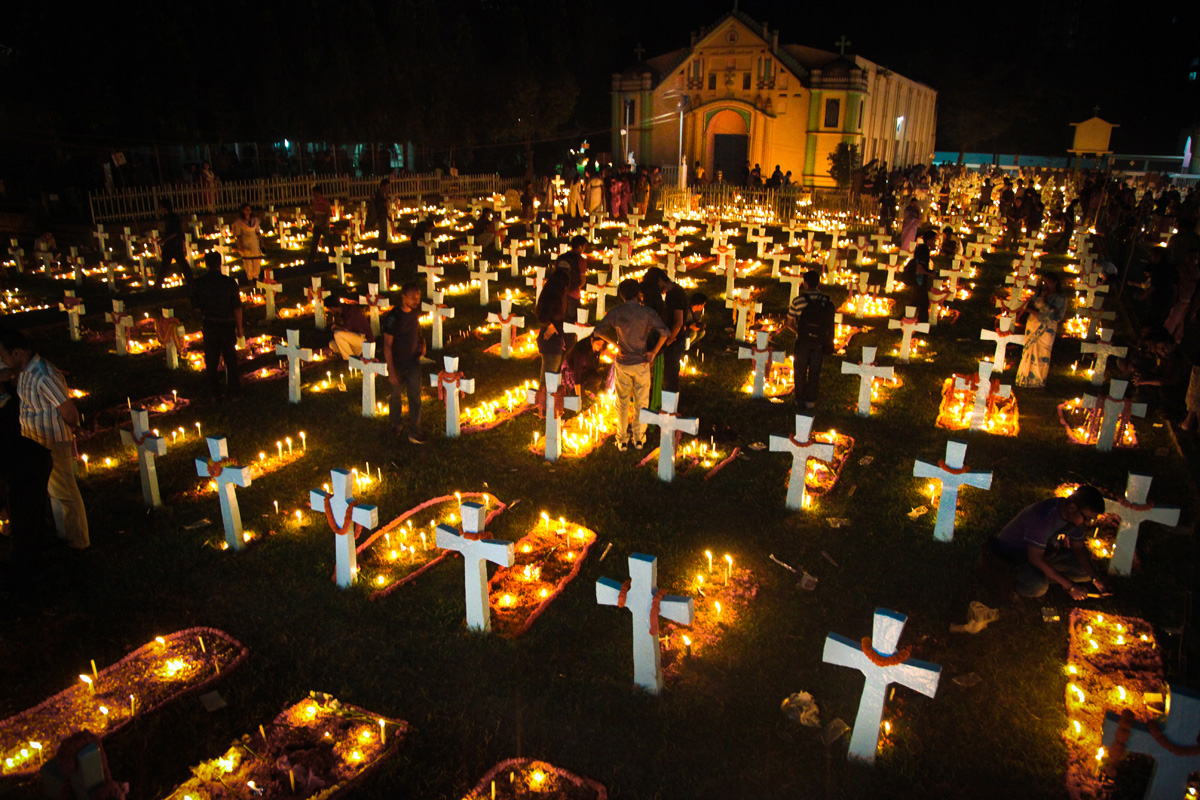
All Souls Day - To pray for our beloved Dead November 2
TWO OUTPOURINGS OF GRACE AT ONCE
(A biblical reflection on the COMMEMORATION OF ALL SOULS – Sunday, 2 November 2014
Gospel Reading: John 6:37-40
First Reading: 2Maccabees 12:43-46; Psalms: Psalm 130:1-8; Second Reading: 1Corinthians 15:12-34
The Scripture Text
All that the Father gives Me will come to Me; and him who comes to Me I will not cast out. For I have come down from heaven, not to do My own will, but the will of Him who sent Me; and this is the will of Him who sent Me, that I should lose nothing of all that He has given Me, but raise it up at the last day. For this is the will of My Father, that every one who sees the Son and believes in Him should have eternal life; and I will raise him up at the last day. For this is the will of My Father, that every one who sees the Son and believes in Him should have eternal life; and I will raise him up at the last day” (John 6:37-40 RSV)
All that the Father gives Me will come to Me; and him who comes to Me I will not cast out. For I have come down from heaven, not to do My own will, but the will of Him who sent Me; and this is the will of Him who sent Me, that I should lose nothing of all that He has given Me, but raise it up at the last day. For this is the will of My Father, that every one who sees the Son and believes in Him should have eternal life; and I will raise him up at the last day. For this is the will of My Father, that every one who sees the Son and believes in Him should have eternal life; and I will raise him up at the last day” (John 6:37-40 RSV)
This is one of those special days where we get two outpourings of grace at once. Traditionally, All Souls Day is set aside to pray for those in Purgatory. Drawing from Scripture and Sacred Tradition, the Church has taught that everyone who dies in God’s grace but is not yet perfectly purified undergoes a final purification. These are the ones who “will be saved, but only as through fire” (1Corinthians 3:15; see also the Catechism of the Catholic Church, 1030-1032). Similarly, various figures in the Old Testament “made atonement for the dead that they might be delivered from their sin” (2Maccabees 12:42). So this is the first outpouring. Today is a day to recall and intercede for those who are on the threshold of heaven.
What’s the second outpouring? Today is also a day to celebrate the firmness of our salvation. In baptism our old life was buried with Christ, and we have risen with Him into a whole new life. God does not want Jesus to lose anyone (John 6:39). Does this mean that now that we’re baptized we can sin all we want? Of course not! God hasn’t withdrawn His commandments. Common sense should tell us, as the Scriptures do (Mark 1:4,15; 16:16), that baptism must be accompanied by belief and repentance.
Today, God wants His love to so pierce our hearts that we would never want to offend Him or hurt anyone else. As we come to understand that we were lost in sin and that Jesus offered Himself up for us, we will want to imitate Him. Jesus’ love for us will move us to purify ourselves of every vestige of sin, every attitude that resists His words and His ways. Our outlook on ourselves and on the world will change, and we will become more and more like Jesus.
Why would we even want to wait for Purgatory? God is calling us to maturity – here and now – to receive all the gifts He wants to give us. He wants to empower us to build His Kingdom and spread His Gospel. By His grace we can change the world. Let’s do it!
Prayer: Lord Jesus, You are the bread of life that came down from heaven to bring us life. Nourish and strengthen us so that we might love as You love and in the end be welcomed into the beauty and wonder of Your Kingdom. Amen.
Jakarta, 1 November 2014 [ALL SAINTS DAY]
A Christian Pilgrim
| Comment | See all comments | Like |
Unsubscribe to no longer receive posts from A CHRISTIAN PILGRIMAGE.
Change your email settings at Manage Subscriptions.
Trouble clicking? Copy and paste this URL into your browser:
http://achristianpilgrim.wordpress.com/2014/11/02/two-outpourings-of-grace-at-once/ |
Thanks for flying with  WordPress.com WordPress.com |

Subscribe to:
Posts (Atom)