Saturday, June 25, 2016

June 26 Sunday's Readings

New post on CNS Blog

Word to Life — Sunday Scripture readings, June 26, 2016

by Administrator1
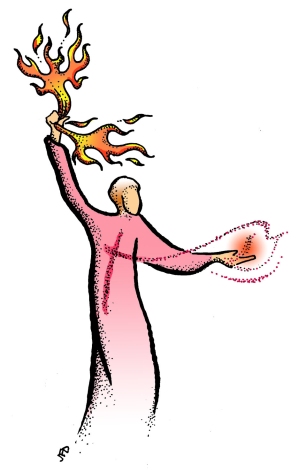
"'Lord, do you want us to call down fire from heaven to consume them?' Jesus turned and rebuked them." -- Luke 9:54-55
June 26, Thirteenth Sunday in Ordinary Time
Cycle C. Readings:
1) 1 Kings 19:16b, 19-21
Psalm 16:1-2, 5, 7-11
2) Galatians 5:1, 13-18
Gospel: Luke 9:51-62

By Jeff Hedglen
Catholic News Service
When I was in high school I signed up for a special district-wide class on criminal justice. The idea was to gather from every school students who were considering a career in law enforcement.
I had to travel across town to another school for the course and it turned out all the other students in the class went to that school. I was the only outsider. For an entire year the whole class treated me rudely, made fun of me and called me offensive names. Looking back, it was one of the best years of my life.
I had been taught by my family and my faith to turn the other cheek, and I strived all year to do just that. I never lashed out at these other students; I just took their insults and did my best to be the better person. This experience has had a lasting impact on me.
It came to mind when reading this week's Gospel. Jesus wants to visit a Samaritan town, but the local people refuse to welcome him. Jesus' disciples ask him, "Lord, do you want us to call down fire from heaven to consume them?" But Jesus rejects this idea.
To be sure, when I was in that class daily with students who refused to welcome me I wanted to "call down fire from heaven," but by the grace of God I was able to lean more heavily on the message from St. Paul this week: "Live by the Spirit and you will certainly not gratify the desire of the flesh."
So often we are in danger of letting our worldly passions rule our life. But Jesus and St. Paul in unison reject this idea and call us to live by the Spirit.
Living by the Spirit does not mean that we cannot have passion; rather, it means we have surrendered to the will of God and have allowed his will to guide our passions.
As with most things in the spiritual life, it's simple but not easy. We must be steeped in the things of the Spirit and avoid the thoughts and activities mired in the flesh if we are to have a fighting chance. But fight we must, lest we call down that fire from heaven and end up singed by our own wrath.
QUESTIONS:
Do you remember a time when you wanted to "call down fire from heaven"? What are some things you do to strive to live in the Spirit?
Administrator1 | June 24, 2016 at 5:22 pm | Categories: CNS | URL: http://wp.me/peBMy-8Vc
Comment   See all comments   Like
Unsubscribe to no longer receive posts from CNS Blog.
Change your email settings at Manage Subscriptions.
Trouble clicking? Copy and paste this URL into your browser: 
https://cnsblog.wordpress.com/2016/06/24/word-to-life-sunday-scripture-readings-june-26-2016/

Wednesday, June 22, 2016

St. Thomas More June 22


The Life of Sir Thomas More (1478-1535)

"The King's good servant, but God's first."1

Thomas More was born in Milk Street, London on February 7, 1478, son of Sir John More, a prominent judge. He was educated at St Anthony's School in London. As a youth he served as a page in the household of Archbishop Morton, who anticipated More would become a "marvellous man."1 More went on to study at Oxford underThomas Linacre and William Grocyn. During this time, he wrote comedies and studied Greek and Latin literature. One of his first works was an English translation of a Latin biography of the Italian humanist Pico della Mirandola. It was printed by Wynkyn de Worde in 1510.
      Around 1494 More returned to London to study law, was admitted to Lincoln's Inn in 1496, and became a barrister in 1501. Yet More did not automatically follow in his father's footsteps. He was torn between a monastic calling and a life of civil service. While at Lincoln's Inn, he determined to become a monk and subjected himself to the discipline of the Carthusians, living at a nearby monastery and taking part of the monastic life. The prayer, fasting, and penance habits stayed with him for the rest of his life. More's desire for monasticism was finally overcome by his sense of duty to serve his country in the field of politics. He entered Parliament in 1504, and married for the first time in 1504 or 1505, to Jane Colt.2 They had four children: Margaret, Elizabeth, Cicely, and John.
      More became a close friend with Desiderius Erasmus during the latter's first visit to England in 1499. It was the beginning of a lifelong friendship and correspondence. They produced Latin translations of Lucian's works, printed at Paris in 1506, during Erasmus' second visit. On Erasmus' third visit, in 1509, he wrote Encomium Moriae, or Praise of Folly, (1509), dedicating it to More.
      One of More's first acts in Parliament had been to urge a decrease in a proposed appropriation for King Henry VII. In revenge, the King had imprisoned More's father and not released him until a fine was paid and More himself had withdrawn from public life. After the death of the King in 1509, More became active once more. In 1510, he was appointed one of the two under-sheriffs of London. In this capacity, he gained a reputation for being impartial, and a patron to the poor. In 1511, More's first wife died in childbirth. More soon married again, to Alice Middleton. They did not have children.
      During the next decade, More attracted the attention of King Henry VIII. In 1515 he accompanied a delegation to Flanders to help clear disputes about the wool trade.Utopia opens with a reference to this very delegation. More was also instrumental in quelling a 1517 London uprising against foreigners, portrayed in the play Sir Thomas More, possibly by Shakespeare. More accompanied the King and court to the Field of the Cloth of Gold. In 1518 he became a member of the Privy Council, and was knighted in 1521.
      More helped Henry VIII in writing his Defence of the Seven Sacraments, a repudiation of Luther, and wrote an answer to Luther's reply under a pseudonym. More had garnered Henry's favor, and was made Speaker of the House of Commons in 1523 and Chancellor of the Duchy of Lancaster in 1525. As Speaker, More helped establish the parliamentary privilege of free speech. He refused to endorse King Henry VIII's plan to divorce Katherine of Aragón (1527). Nevertheless, after the fall of Thomas Wolsey in 1529, More became Lord Chancellor, the first layman yet to hold the post.
      While his work in the law courts was exemplary, his fall came quickly. He resigned in 1532, citing ill health, but the reason was probably his disapproval of Henry's stance toward the church. He refused to attend the coronation of Anne Boleyn in June 1533, a matter which did not escape the King's notice. In 1534 he was one of the people accused of complicity with Elizabeth Barton, the nun of Kent who opposed Henry's break with Rome, but was not attainted due to protection from the Lords who refused to pass the bill until More's name was off the list of names.3
      In April, 1534, More refused to swear to the Act of Succession and the Oath of Supremacy, and was committed to the Tower of London on April 17.  More was found guilty of treason and was beheaded alongside Bishop Fisher on July 6, 1535. More's final words on the scaffold were: "The King's good servant, but God's First." More was beatified in 1886 and canonized by the Catholic Church as a saint by Pope Pius XI in 1935.


1. Last words on the scaffold, 1535, according to Paris Newsletter, August 4, 1535:
"qu'il mouroit son bon serviteur et de Dieu premierement."
2. Ackroyd, Peter. The Life of Thomas More. New York: Anchor Books., 1999.
3. The Cambridge Guide to Literature in English. Ian Ousby, Ed.
Cambridge, Cambridge University Press, 1998.


Other local biographical resources:


Bibliography:
Ackroyd, Peter. The Life of Thomas More. (1998)
Fox, Alistair. Thomas More: History and Providence. (1983)
Fox, Alistair. Utopia: An Elusive Vision. (1992)
Logan, George M. The Meaning of More's Utopia (1983)
Marius, Richard. Thomas More: A Biography (1984)
Pineas, Rainer. Thomas More and Tudor Polemics (1968)
Reynolds E. E. Sir Thomas More (1965)
Reynolds E. E. Thomas More and Erasmus. (1965)
Reynolds E. E. The Field Is Won: The Life and Death of Saint Thomas More. (1968)
Wegemer, Gerard B. Thomas More : A Portrait of Courage. (1995)
Wegemer, Gerard B. Thomas More on Statesmanship. (1996)


Article Citation:

Jokinen, Anniina. "The Life of Sir Thomas More." Luminarium.
         6 July 2012. [Date you accessed this article].
         <http://www.luminarium.org/renlit/morebio.htm>


Backto Luminarium Main
Backto Renaissance English Literature
Backto Sir Thomas More
Backto Luminarium Encyclopedia


Site copyright ©1996-2012 Anniina Jokinen. All Rights Reserved.
  Created by Anniina Jokinen on May 31, 1996. Last updated on July 6, 2012.


ST. THOMAS MORE – FEAST DAY: JUNE 22

by achristianpilgrim
WA500_The_things_that_we_pray_for


Monday, June 20, 2016

June 20 World Refugee Day

World Refugee Day: Pope Francis-style

by Carol Glatz
refugees epa
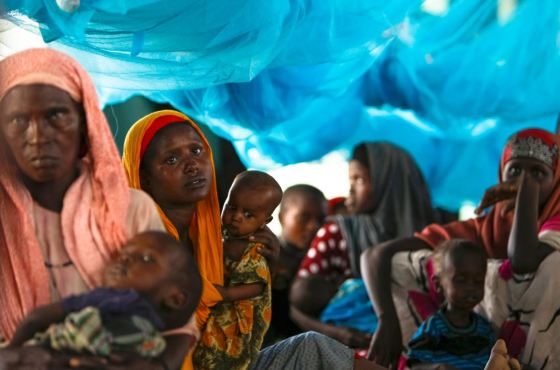
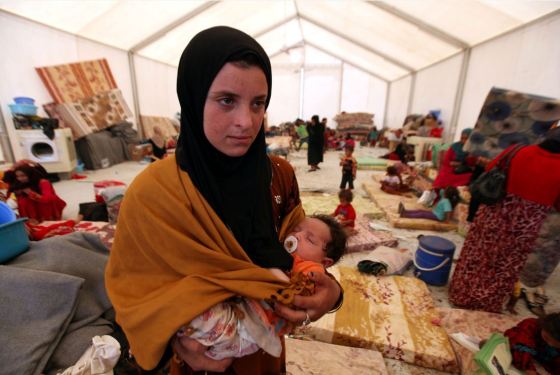
Somali refugees in a tent in 2011 at the Ifo Extension refugee camp in Dadaab, Kenya.   (CNS photo/Dai Kurokawa, EPA)
VATICAN CITY -- Pope Francis marked today's World Refugee Day with an appeal toassist and accompany refugees as well as remedy the injustices and conflicts that force people to flee.
Throughout his pontificate, he has repeatedly underlined the plight of people compelled to leave their home and the Gospel call to "welcome the stranger":
Migrants and refugees are not pawns on the chessboard of humanity. They are children, women and men who leave or who are forced to leave their homes ...
-- Pope Francis, World Message for Migrants & Refugees 2014
Too often you have not been welcomed. Forgive the closure and indifference of our societies, which fear the change of life and mentality that your presence requires. Treated as a burden, as problem, a cost, you are instead a gift. You offer witness of how our gracious and merciful our God knows how to transform the evil and injustice you suffer into a good for all.
-- Pope Francis, Message to Jesuit "Astalli" refugee center in Rome 2016

ewf child
A displaced woman carries her sleeping child June 15 at a refugee camp near Mosul, Iraq. (CNS photo/Azad Lashkari, Reuters)
In an effort to give voice to some of the 60 million estimated refugees in the world, Jesuit Refugee Service interviewed a handful of the many people they help. They produced this video as part of their campaign, "Open minds, unlock potential," which is promoting the need to offer education to and be receptive of new arrivals.
The International Catholic Migration Commission is also sharing stories of resettled refugees around the world as a way to encourage those still waiting for a place to call home and to call attention to the benefits refugees bring to host communities. It is using the #HandsOfMercy, #StoriesOfMercy and #WithRefugees to share or send personal stories or messages of hope on social media.
Carol Glatz | June 20, 2016 at 10:54 am | Categories: CNS | URL: http://wp.me/peBMy-8Td
Comment   See all comments   Like
Unsubscribe to no longer receive posts from CNS Blog.
Change your email settings at Manage Subscriptions.
Trouble clicking? Copy and paste this URL into your browser:
https://cnsblog.wordpress.com/2016/06/20/world-refugee-day-pope-francis-style/

Monday June 20, 2016

SONY DSC

Saturday, June 18, 2016

For Sunday June 19th Father's Day

Word to Life — Sunday Scripture readings, June 19, 2016

by Administrator1
"Whoever loses his life for my sake will save it." -- Luke 9:24

June 19, Twelfth Sunday in Ordinary Time
      Cycle C. Readings:
      1) Zechariah 12:10-11; 13:1
      Psalm 63:2-6, 8-9
      2) Galatians 3:26-29
      Gospel: Luke 9:18-24

By Jean Denton
Catholic News Service
In today's Gospel, Jesus' disciples acknowledge him as "the Christ of God," the promised Messiah who will save the world.
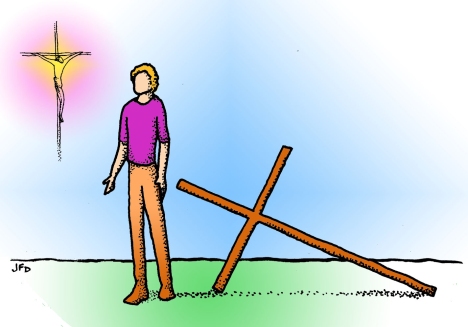
He proceeds to tell them how this will happen: through his suffering, death and resurrection. Then he adds that whoever "wishes to come after me" would have to give up his former way of life and take on Jesus' way, including the suffering that goes along with it.
No doubt if there had been a Galilean word for "yikes!" the disciples would have uttered it at that point. It's one thing to know and accept who Jesus is. The harder part comes in facing what that means in one's relationship with him and in choosing to spend one's life following him.
As a catechist, I often sensed this struggle in teenagers preparing for confirmation. The young people came with a wide range of faith formation prior to entering the program. Some had attended parish formation classes since they were in kindergarten; others had received rigorous religious education in Catholic school; and still others had only minimal catechesis since receiving their first Communion as second-graders.
Each year, as the class progressed, I saw nearly all of the young people grow to an understanding and acceptance of who Jesus is. But not all seemed certain about their desire to be confirmed in the church.
Interestingly, the individuals most conflicted were those who had a personal, spiritual relationship with Jesus. Invariably, as the day for the sacrament approached, those young people would tell me, "I don't think I'm ready."
They didn't take this step lightly. For them, coming into full participation in the church was a serious moment of truth. It meant making the decision to actively follow Jesus as a disciple with all the complications that entails.
Most of these conscientious ones chose to be confirmed. But a few decided to wait until they felt sure they could hold up their end of the bargain.
I've never worried for their souls. It was obvious they had a deep faith in Jesus as their guide and savior. Besides, the fact that they were stressing over whether they could serve him well enough revealed they already had taken up their crosses.
QUESTION:
What makes the difference for you between knowing who Jesus is and taking up your cross to follow him?
Administrator1 | June 17, 2016 at 4:34 pm | Categories: CNS | URL: http://wp.me/peBMy-8Ta
Comment   See all comments   Like
Unsubscribe to no longer receive posts from CNS Blog.
Change your email settings at Manage Subscriptions.
Trouble clicking? Copy and paste this URL into your browser: 
https://cnsblog.wordpress.com/2016/06/17/word-to-life-sunday-scripture-readings-june-19-2016/

Thursday, June 16, 2016

Father's Day June 19


fathersday_emailheader.jpg

Happy Father's Day!

On Sunday, we honor our dads and all the special men in our lives. We honor the strength, love, and courage we receive from them. And we pray that they draw strength from God's grace at work in their lives.